1/114 Merrindale Dr
Croydon South, VIC 3136
(03) 8799 2974
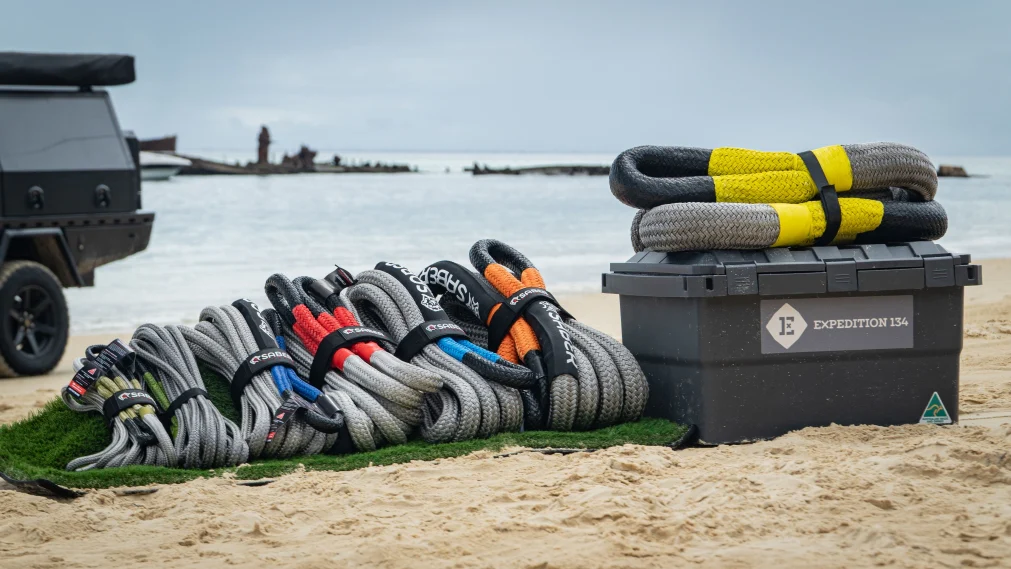
When your 4WD sinks into mud or sand, a kinetic recovery rope is often the fastest, smoothest, and a safe way to get moving again. This guide keeps it beginner-friendly and practical, usingSaber Offroad’s rope range as your reference. You’ll learn what makes kinetic ropes special, the simple physics behind choosing the right size, and exactly which rope maps to your rig’s weight.
A kinetic rope is purpose-built to stretch (up to ~30%) under load. That controlled stretch is the secret: instead of a painful “yank,” the rope stores the towing vehicle’s momentum and releases it smoothly, pulling the stuck vehicle free with less shock to both vehicles.
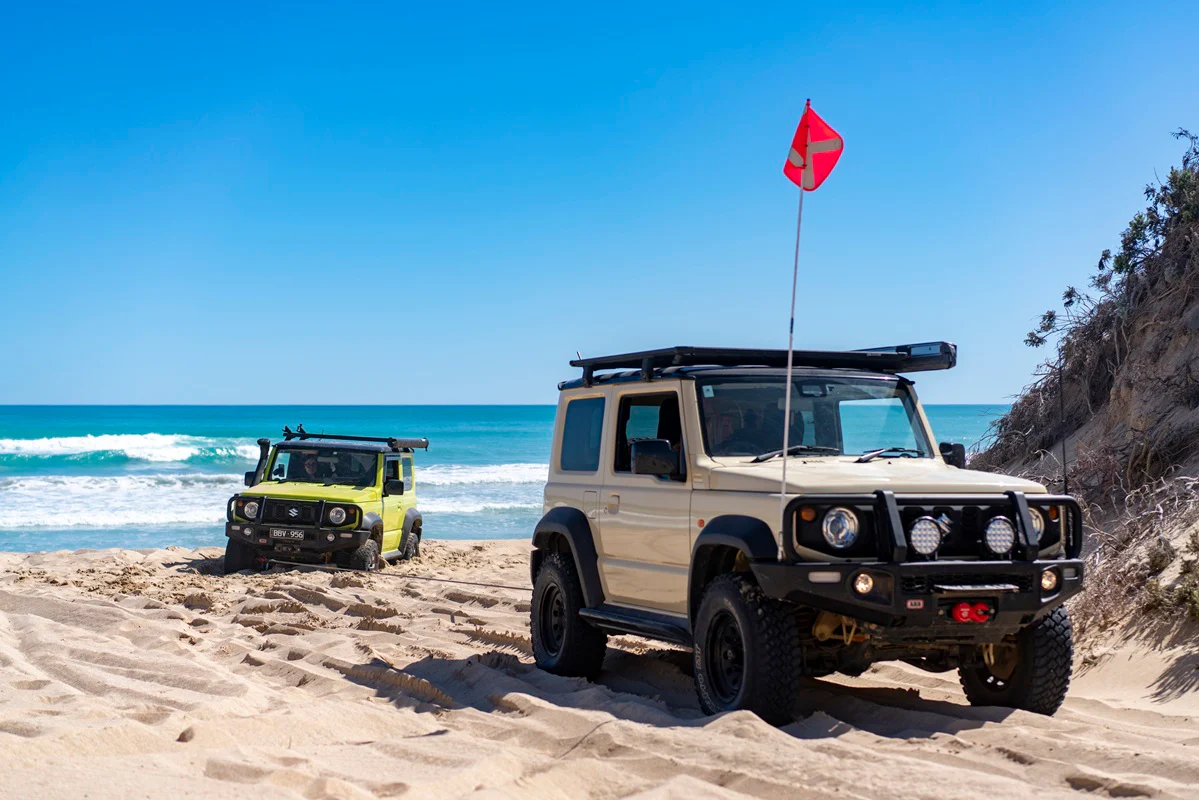
Smooth stretch = controlled force. The rope absorbs energy and protects vehicles and occupants.
Think bungee jumping: a stretchy cord slows you down gently rather than stopping you abruptly. A kinetic rope does the same for your recovery—less spike, more control. That’s easier on recovery points, chassis, and necks.
To choose the right rope, start with your vehicle’s GVM (loaded weight). The practical rule is simple:
Pick a kinetic rope with a Minimum Breaking Strength (MBS) around 2 to 3 times your vehicle’s GVM.
Why this range?
Always size to the lighter vehicle in the recovery. If a Hilux (lighter) is recovering a Landcruiser (heavier), choose based on the Hilux’s GVM so the rope actually stretches when the lighter rig applies the pull. While we suggest always having the rope for your vehicle, if you travel often with the same group of mates its worth looking at this.
Saber’s kinetic ropes are 9 m long, built from heavy-duty double-braided Nylon 66, and engineered for up to ~30% stretch. Here’s a quick mapping you can trust:
| Saber Rope | Typical Vehicle Class | Example GVM Range | Why This Size |
|---|---|---|---|
| 4,000 kg | Light 4x4s, compact SUVs | ~1.2–2.0 t | Gives meaningful stretch for lighter rigs (e.g., Jimny) while maintaining a solid safety margin. |
| 8,200 kg | Most dual-cab utes & mid-size wagons | ~2.5–4.0 t | The all-rounder for Hilux/Ranger/Prado/D-MAX class. Sweet-spot of stretch + strength. |
| 12,500 kg | Heavy wagons & touring builds | ~4.0–6.0 t | For big wagons (LC200/300, Patrol) and loaded tourers that need more energy capacity. |
| 16,000–18,000 kg | Very heavy 4x4s & light trucks | ~5.3–8.0 t | For expedition rigs and commercial 4x4s where loads and suction are significant. |
| 22,000 kg | Extreme/heavy off-road vehicles | ~7.3–11.0 t | For Unimogs, off-road service trucks, and severe-duty scenarios. |
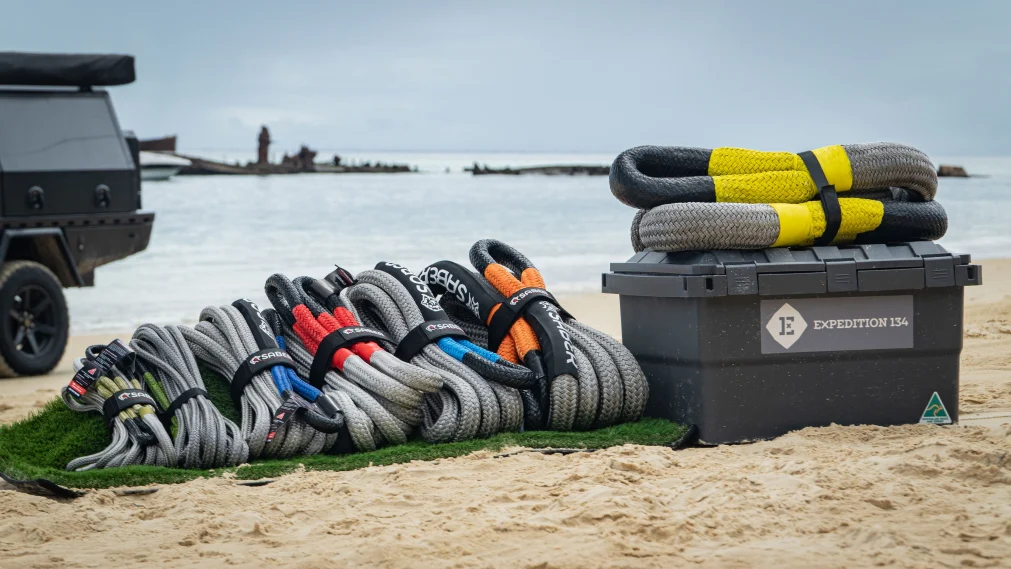
From Jimnys to Unimogs—map your GVM to the right Saber rope.
Tip: If you regularly tow or carry heavy accessories, calculate with your loaded weight. Better still, weigh your rig at a public weighbridge to remove the guesswork.
Oversizing sounds safe, but a rope that’s far stronger than your GVM won’t stretch much under your pull. That means higher, sharper forces into chassis and recovery points, and you’ll need a harsher run-up to make it work. The 2×–3× guideline exists to keep recoveries controlled and gentle—which is the whole point of kinetic ropes.
The first peak load in a smooth kinetic pull scales like F ≈ (m × v²)/(ε × L), where ε is stretch and L is rope length. Increase usable stretch from 20% to 30% (with the same mass and speed) and you increase stopping distance by 50%, which reduces peak force by about a third. More stretch = lower peak = safer, smoother recoveries.
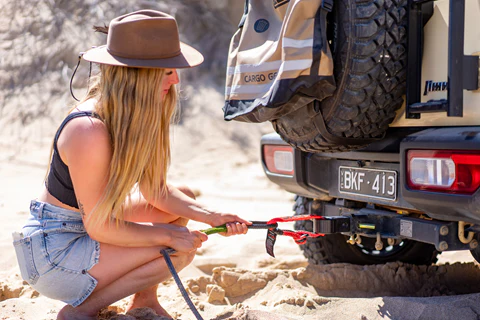
Set up cleanly, stay clear, and let the rope stretch do the heavy lifting.
Use this quick map if you’re just getting started:
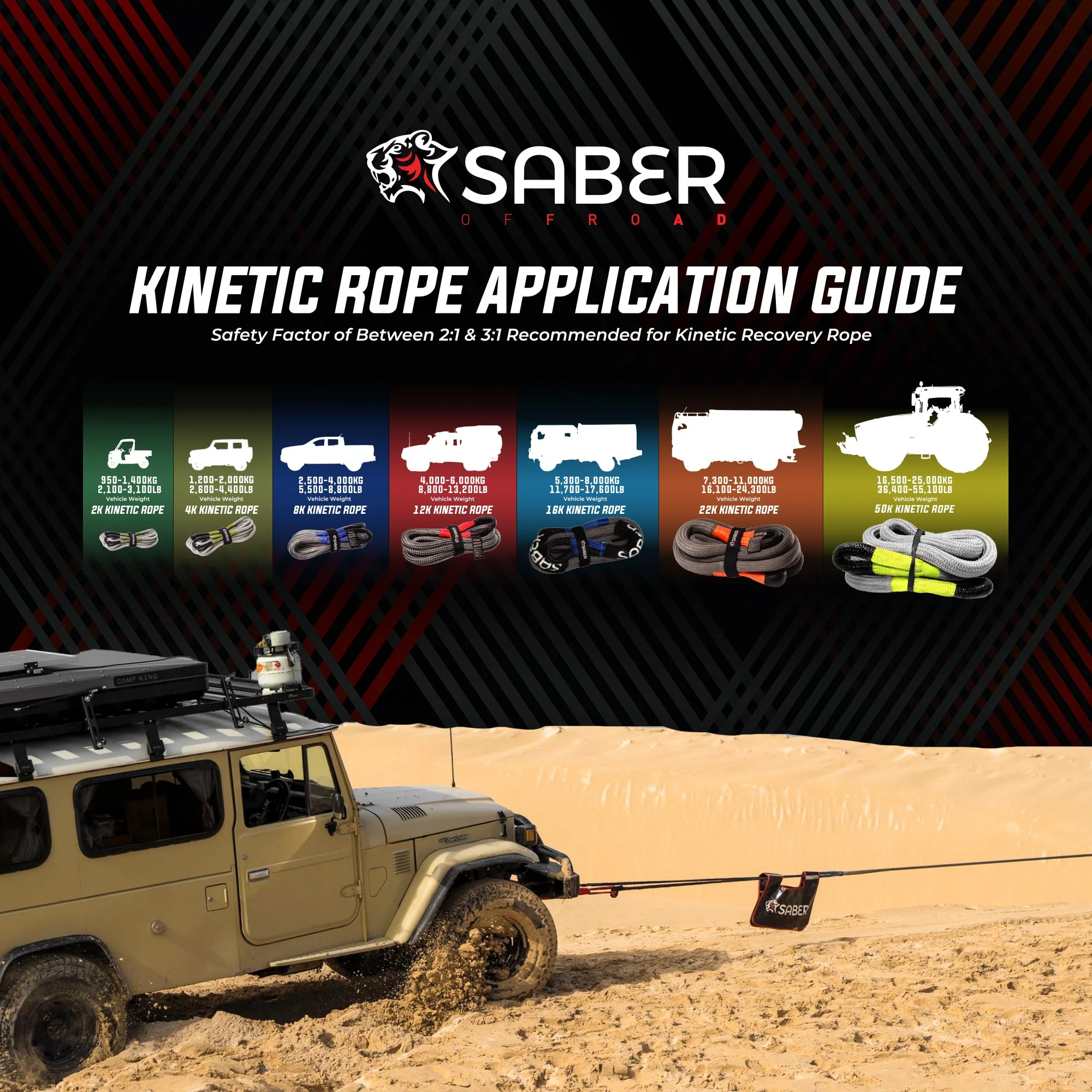
If you’re between categories, consider how you usually travel (solo & light vs towing & fully loaded) and pick accordingly. When in doubt, feel free to get in touch with us — we’ll help you choose the right size for your build and the way you use it.
Q: Do I really need a kinetic rope if I have a tow strap?
A: A tow strap is fine for gentle towing on firm ground. A kinetic rope is designed for bog recoveries—its stretch gives you controlled force and momentum, making difficult pulls smoother and safer.
Q: Can I connect to a tow ball?
A: No. Only use rated recovery points. A tow ball can shear off and become a projectile.
Q: How fast should I go?
A: Usually 10–15 km/h. It usually doesn’t take much speed if the setup is right; let the rope’s stretch do the work.
Q: Soft shackle or steel shackle?
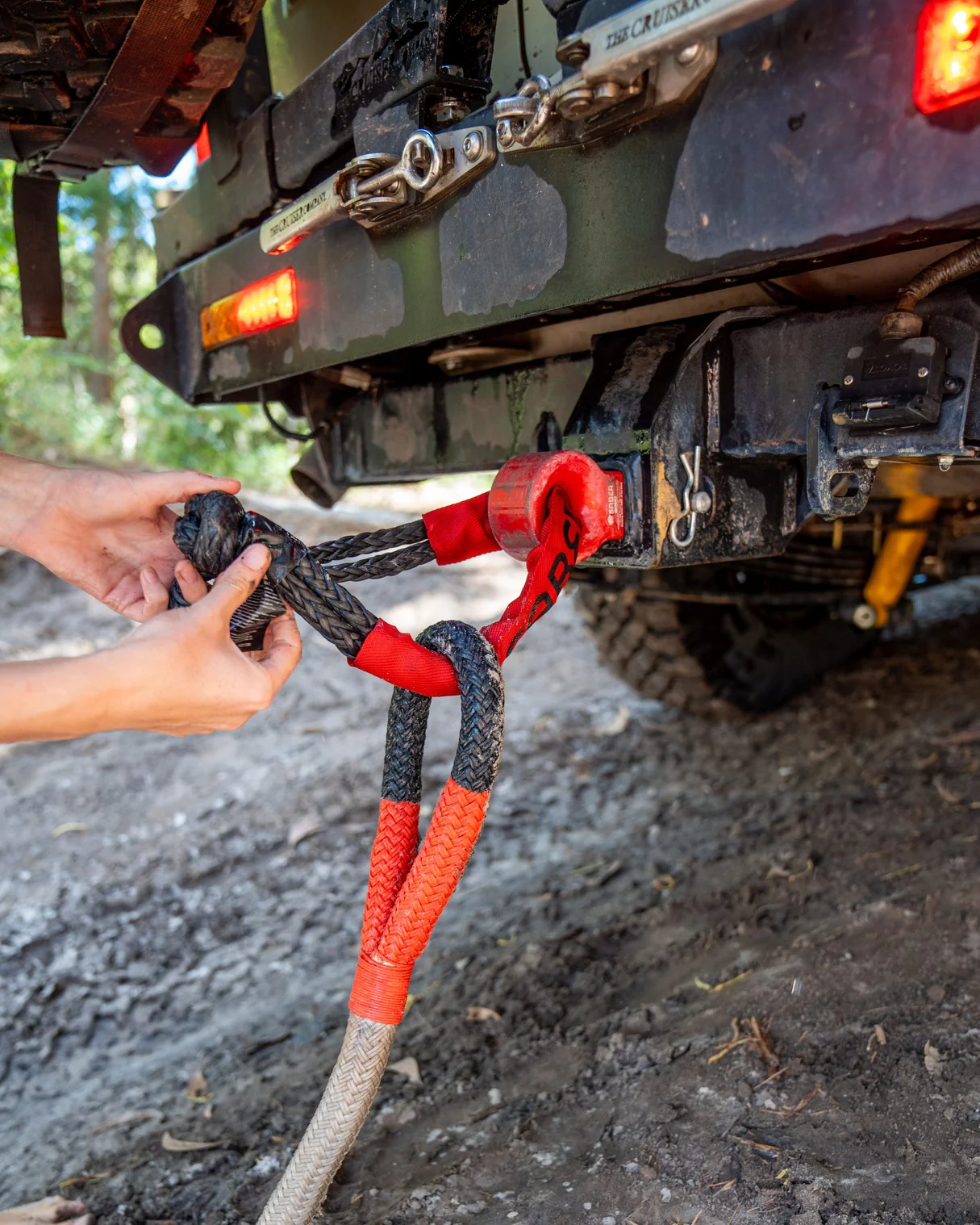
A: We recommend soft shackles for kinetic recoveries. They’re strong, light, won’t rust, and are less hazardous if something fails.
Choosing the right kinetic rope is simple: use 2–3× your GVM, size to the lighter vehicle, and let the rope’s stretch deliver smooth, controlled force.
The Saber Offroad range covers everything from compact 4x4s to heavy off-road rigs—engineered for real-world conditions with safety front and centre.
SABER The Gear To Get You Home..