
1/114 Merrindale Dr
Croydon South, VIC 3136
(03) 8799 2974
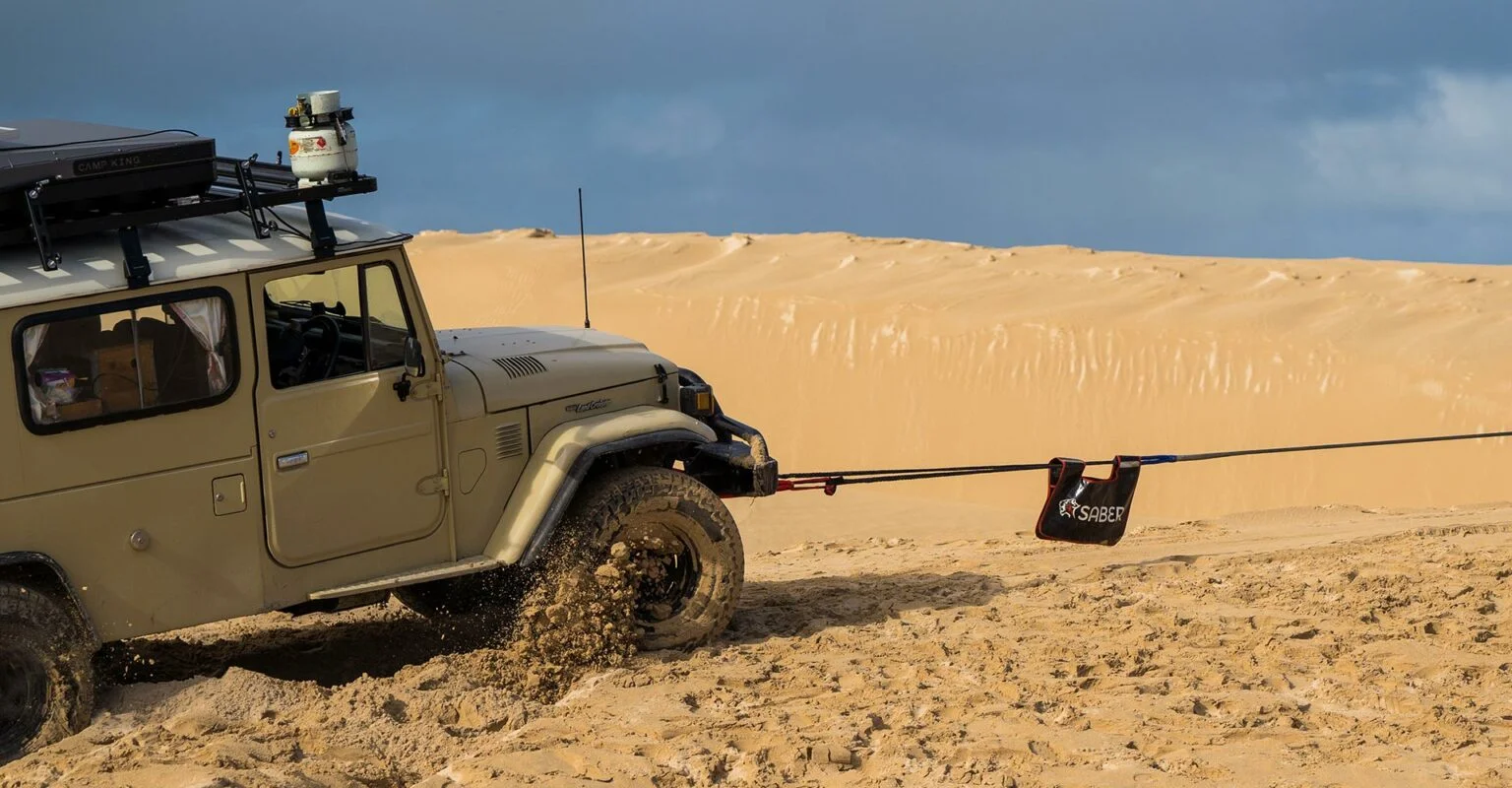
Saber Offroad kinetic rope is one of the most effective recovery tools you can travel with – and it's changing the 4×4 recovery game.
The next generation of recovery rope is safer, smarter and stronger, and it's been designed as a smoother way to recover vehicles in any situation, including mud, sand, water and snow.
In this buyer's guide, we outline important details about kinetic rope and its benefits so you can make an informed decision when choosing your next recovery rope.
Kinetic rope is changing the 4×4 recovery game. Also known as a snatch rope, kinetic recovery ropes are designed to stretch, transferring the build up of kinetic energy from the recovering vehicle to the vehicle that is stuck to perform a safer recovery. Their elasticity means they will stretch 50 per cent more than a traditional snatch strap.
Saber kinetic recovery ropes are made from premium braided Nylon 66, which can stretch, unlike other synthetic rope materials. Saber's Nylon 66 is a premium Nylon and differentiates considerably from the normal Nylon 6 used in cheaper straps and ropes. Saber chooses Nylon 66 due to its higher melting point, superior strength, better rigidity, and lower moisture absorption. It provides 33% higher abrasion resistance and better thermal stability than lower quality Nylons.
It has two components: an outer sleeve and an inner core.
The reason you would use a kinetic rope is primarily determined by the surfaces that both vehicles are on. If both vehicles are in soft sand and you try to recover using a static strap or chain, the recovering vehicle will simply dig itself into a hole, likewise on a slippery muddy track. Ultimately, without proper traction in any situation, the recovery vehicle will simply bog down.
In most cases, a kinetic rope will allow the recovering vehicle to gain a small amount of momentum, reducing the possibility of bogging down.
It is important to note that, while incredibly useful, kinetic ropes and snatch straps are one of the most dangerous forms of recovery and should be done with caution every time.
Kinetic energy ropes work by transferring energy from the vehicle with momentum to the vehicle that is bogged down. The rope absorbs the kinetic energy from the first vehicle, stores it momentarily as potential energy and then applies the force from the rope into the stuck vehicle. This process results in an extremely effective and efficient recovery.
The stretch that the rope experiences also allows the recovery to take place in a safer manner as it creates a smoother application of force in comparison to a traditional snatch strap.
When you are upgrading your recovery kit to include kinetic rope, there are several areas to consider:
The strength of kinetic rope is determined by its thickness and the outer coating on the rope.
Nylon ropes are designed to be water-resistant, UV resistant and abrasion resistant, however, when water reaches the nylon core it is weakened instantly, which is why they are often protected with a strong (polymer) outer coating.
At Saber Offroad, the combination of the highest quality, flexible and heavy-duty Nylon 66 material, and our unique outer treatment on the finished rope, gives our kinetic ropes protection from damaging UV and abrasives such as dirt and sand.
The size of the recovery rope is vital to the recovery of the vehicle and situation. If you don't have the correct size for your vehicle, it may be difficult to perform the recovery and it could become unsafe.
Kinetic recovery ropes range in size and load rating. At Saber Offroad, our 9m kinetic ropes are rated from 4000kg to 22,000kg minimum breaking strength to cover every recovery situation, from small to medium 4WDs up to the big rigs, commercial vehicles and machinery.
It's important to use the rope rated for the lightest vehicle in the recovery. When working out the size of the rope needed for your particular vehicle, the rule is 2-3x the weight of your vehicle when being recovered.
The following is a guide for choosing the right kinetic rope:
Why is it important to have the correctly weighted rope?
Having a correctly weighted rope is also an important factor in a successful recovery. Kinetic rope is designed to give you approximately 30 per cent stretch, which is based on the amount of force being applied to the rope.
If the rope is not weighted correctly and is too heavy for your vehicle, it won't be able to stretch properly, making the kinetic rope act more like a chain or static rope. This may cause the vehicle performing the recovery to also become stuck. In the unlikely event of a failure an oversized rope can also mean that the failure point is on the vehicle when it is preferable for the centre of the rope to be the breaking point.
On the other hand, if the rope is too light for the recovery scenario, it is likely to break well before the force being applied to the rope reaches a high enough level to make any impact.
When choosing a kinetic recovery rope, look at the depth of the splice in the rope – that is, how far the rope is folded back on itself to form the loop. The splice can also determine how strong the rope is. Generally, the longer the splice, the more strength the rope has. Also, look at the tapering of the splice. If the splice isn't tapered well at the end and has a harsh finish, it can create a weak point in the rope. If you can see a clearly defined "end" to the splice, it may not have been done well.
When choosing a kinetic rope, it's also important to choose a trusted manufacturer and brand. At Saber Offroad, our kinetic ropes also offer:
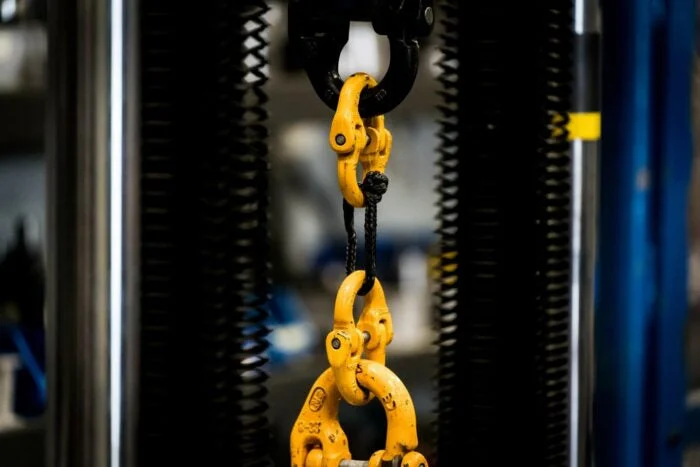
What makes kinetic recovery ropes better than traditional snatch straps? Compared to a tow rope, chains or even a traditional snatch strap, the benefits of using a kinetic recovery rope are many and varied. Kinetic recovery rope is now considered a safer and better recovery option than snatch straps because it's strong, has more stretch and gives a smoother recovery with less shock factor.
The main advantage of kinetic rope over a snatch strap is in its protection of the core, and that a splice is much stronger than the sewn eyes on the strap. Traditional straps are damaged easily and have to be taken out of service early for nicks and small cuts to the strap, while a rope with a protective layer can have a few nicks and cuts as long as the core remains undamaged.
Benefits of kinetic rope:
At Saber Offroad, we believe kinetic recovery ropes can be the best option in certain recovery situations and are certainly worth having in your recovery kit. In comparison to a snatch strap, they provide a safer recovery with around 50 per cent more stretch in the rope. On top of that, they don't degrade as fast and retain their stretch over time when compared to a snatch strap.
These factors mean that while the initial outlay for kinetic rope may be higher than a snatch strap, you will get more uses out of your rope. In fact, many people report up to 100 recoveries out of a kinetic rope versus the recommended 10 for a snatch strap.
Saber. The Gear To Get You Home.
Explore the Saber Kinetic Rope range, or got a question about the right recovery gear for your setup? Get in touch with the Saber Offroad team.
References (Safety & Guidance):